Laser Treatment For Spider Veins
 Laser treatment for spider veins uses light through the skin to treat tiny visible blood vessels. At San Francisco Vein Center, we use it specifically for some small leg veins, facial veins and broken capillaries that can be difficult to inject. We examine the area first to see whether laser is a good fit for your veins and skin.
Is this the same as EVLT? No. Spider-vein laser treatment directs energy through the skin toward a small visible vessel. EVLT (also called EVLA) uses a laser fiber inside a larger vein with faulty blood flow. It is for larger varicose veins. These are different procedures for different vein problems.
What Can Laser Vein Treatment Treat?
We use laser treatment for tiny visible vessels, generally less than about 1 mm across. These small, widened vessels are also called telangiectasias.
Facial Veins and Broken Capillaries
Small visible vessels around the nose and elsewhere on the face may be suitable for laser treatment. We check their color, depth and location before recommending treatment.
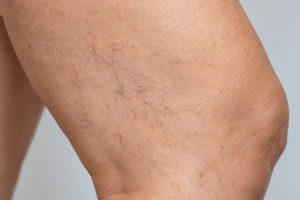
Tiny Leg Spider Veins
Laser may be an option for very fine leg spider veins that are difficult to inject. Larger reticular veins and bulging varicose veins generally need a different approach.
How Does Laser Spider Vein Treatment Work?
Laser light passes through the skin and is absorbed by blood within the targeted vessel. The resulting heat damages the vessel, which closes and gradually becomes less visible. The treatment is delivered from outside the skin.
We use the Apogee Elite laser system to treat small visible vessels. Before treatment, we examine the area and choose an approach suited to your veins and skin.
Choosing Between Laser, Sclerotherapy and Ablation
The right treatment depends on the vein being treated. At SF Vein Center, we use laser for selected tiny visible vessels, particularly facial veins and very fine leg veins that are difficult to inject. Sclerotherapy is commonly used for injectable spider and reticular veins on the legs. Larger veins with faulty valves may require a different approach, such as radiofrequency ablation, after an examination and ultrasound.
When comparing a vein clinic with a med spa or cosmetic laser provider, ask how they decide which treatment is appropriate and whether they evaluate underlying vein problems. Having a laser available does not establish that it is the best treatment for your veins. The recommendation should account for vein size, location, skin type and any symptoms—not simply the equipment available.
Who May Be a Candidate?
We look at your skin type and the veins’ size, location, color and depth to decide whether laser treatment is suitable. Recent tanning or significant sun exposure may affect treatment timing. Tell us about medications, skin sensitivity and prior vein procedures. Bulging veins, significant leg symptoms or signs of an underlying vein problem may need evaluation before cosmetic laser treatment.
What Happens During Laser Treatment?
We clean the treatment area, and you wear protective eyewear. We then position the laser handpiece over the skin and deliver brief pulses to the vessels being treated. Cooling helps manage discomfort during treatment. Appointment time depends on the size and number of areas being treated.
You may feel brief heat or a snapping sensation with each pulse. Cooling helps reduce discomfort. Some areas may feel more sensitive than others, and each person experiences treatment differently.
Preparation and Recovery
Avoid tanning and significant sun exposure before treatment. Let the office know if the area is recently tanned or sunburned. Follow the preparation instructions provided for the area being treated.
Temporary redness, mild swelling or darkening of a treated vessel can occur. Protect the area from sun exposure and follow the skin-care and activity instructions given at your appointment. Aftercare depends on the area treated and how your skin responds.
Results and Number of Sessions
Some small vessels respond quickly; others fade gradually. More than one session may be needed. The number of treatments depends on your veins and how they respond. Everyone responds differently. Laser treatment cannot prevent every new visible vessel from developing later.
Side Effects and Limitations
Laser treatment can cause temporary redness, swelling and changes in skin color. Blistering or longer-lasting darker or lighter patches can also occur. Laser is not the best choice for every vein or skin type. Darker skin contains more melanin, the pigment that can also absorb laser energy. This increases the risk of burns and lasting darker or lighter patches, so skin type is an important part of deciding whether treatment is appropriate. We examine the area to see whether another treatment would suit you better.
Cost and Insurance
Laser treatment of tiny visible vessels for appearance is not covered by insurance. Read more about insurance coverage for vein treatment. Like sclerotherapy, treatments are self-pay with a flat rate for each session.
Request a consultation to learn whether laser treatment, sclerotherapy or another approach is appropriate for your veins. Contact our San Francisco or Daly City office to arrange an appointment.