
Sclerotherapy for Spider Vein Treatment
What is Sclerotherapy Treatment
 Sclerotherapy stands out as the most effective and popular treatment for spider veins or reticular veins. This procedure involves the precise injection of a special solution directly into the small spider veins. The injected solution irritates the vein’s inner lining, causing the walls to stick together close. Eventually, the closed treated spider vein scars and disappears. Sclerotherapy is relatively painless and has a low risk of serious side effects. It is a reliable and straightforward procedure for those seeking removal of spider veins.
Understanding Spider Veins or Reticular Veins
Spider veins or reticular veins are small but visible veins that typically appear on the legs. Spider veins present at the surface of the skin and reticular veins are deeper veins below the skin surface. They typically form as pressure in the blood vessels increases. This can be due to to a number of factors including malfunctioning vein valves, age, heredity, etc.
Who is a Good Candidate for Sclerotherapy
“Sclerotherapy is an effective spider vein treatment for small veins ranging from 1 to 3 mm in diameter. However, this treatment is not suitable for everyone. Patients seeking sclerotherapy often suffer from a condition known as venous insufficiency. It is crucial to thoroughly examine the underlying causes of your vein issues before proceeding with injections. Some conditions like venous insufficiency should be treated before getting spider vein injections.
We do not recommend sclerotherapy for pregnant women. If you are expecting, we advise waiting until after your pregnancy. For insights on this topic, refer to our detailed blog post, ‘Pregnancy and Vein Treatment.’ Additionally, individuals who have a history of blood clots should undergo further medical evaluation. Our goal is to ensure that sclerotherapy is not only effective but also safe for each unique patient.”
Sclerotherapy Solutions and How it Works
The common solutions used for sclerotherapy are Sodium Tetradecyl Sulfate (Sotradecol), Polidocanol (Asclera, Aethoxysclerol), and Hypertonic Saline. At the San Francisco Vein Center, we use the FDA-approved solution Sotradecol which is highly effective and causes only minor stinging compared to other treatments. It is used extensively for spider vein elimination. Sotradecol works by irritating the lining of the vein, causing it to swell and stick together. Over time, the vein turns into scar tissue and disappears. Read our detailed comparison of sclerotherapy solutions.
Procedure Details
Sclerotherapy is as a minor and quick in-office procedure. It involves the injection of a solution directly into the affected veins using ultra-fine needles which ensures minimal pain. Most patients experience only a slight prick and mild stinging during the treatment. However, if you have a particularly low pain tolerance or a significant aversion to needles, then sclerotherapy may not be suitable for you.
Recovery and Aftercare
Adhering to proper post-treatment care is crucial for optimal results and Compression stockings play a pivotal role in the recovery process. For veins located on the thighs or the backs of the knees, thigh-high stockings are advised. Conversely, for veins that appear solely on the calves, knee-high stockings are adequate. It is important to wear these stockings continuously for the first 24 hours post-treatment and then daily for about three weeks every day to maximize healing and effectiveness. They are vital for achieving the best cosmetic outcomes. Our clinic provides high-quality compression stockings at a discounted rate. We also have certified fitters available to ensure that your stockings fir correctly. We give a prescription for compression stockings at the initial consultation.
To avoid complications after your treatment, certain precautions should be taken. Firstly, avoid exposing the treated areas to direct sunlight as UV rays can cause pigmentation issues in the healing veins. You should also refrain from any strenuous activities, including heavy lifting and vigorous exercise, for at least two weeks. These activities can disrupt the healing process and potentially reverse the benefits of the treatment.
Potential Side Effects and Risks
Sclerotherapy often causes bruising for several weeks. Evaluating the success of your spider vein treatment requires patience while you wait for the bruising to disappear and the veins heal and fade. Patients should expect a worse appearance during healing as it is absolutely normal after treatment. For this reason, we recommend patients schedule sessions several months apart. Because treated legs often look worse before they look better, it is best to have sclerotherapy done well in advance of important events such as sunny vacations, weddings, etc.
Aside from bruising, other minor side effects include redness and itching near the injection sites, which generally resolve within a few days and sometimes weeks. In some cases, patients might notice small brown spots or lines. This is less common and typically disappears after a few days. However, they can remain indefinitely.
Success Rate
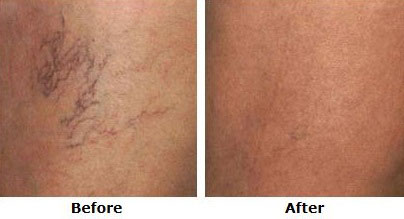 All patients respond differently to sclerotherapy. The average patient will see a difference after the first treatment. However some patients require two or three treatments to see a noticeable difference. It can take weeks and sometimes months for the side effects to subside so it’s best to schedule your sessions months apart.
Sclerotherapy is the best treatment for spider veins but is not guaranteed. Studies show that success rates are typically about 80%. It is important to understand that multiple treatments are often necessary for optimal results. However, every patients responds differently and unfortunately, some patients may not have the results they’re looking for. If venous insufficiency is the underlying cause of spider veins, then spider veins will often recur after treatment. This is why we recommend an evaluation before receiving treatment.
Insurance Coverage
 Insurance companies consider sclerotherapy a cosmetic procedure and typically do not cover it. One exception is when a patient has venous insufficiency. Most patients with venous insufficiency have a vein ablation procedure. After the procedure it is sometimes possible that insurance companies will pay for spider vein treatment as well.
Scheduling a Treatment
A sclerotherapy session covers both legs and generally lasts from 15 to 20 minutes depending on the size and number of veins. Treatment slots can fill up fast so we recommend calling as far in advance as possible to schedule. If you are not sure sclerotherapy is the treatment you need, we strongly suggest you schedule a separate consultation prior to scheduling the procedure. Consultations are typically covered by insurance. Remember that deductibles and copayments apply.